Should You Clean and Seal Your Pavers? Cost, Timing & Tips
Wondering if you should clean and seal your pavers? Learn what sealing does, costs, timelines, and simple DIY habits to keep driveways and patios looking great.
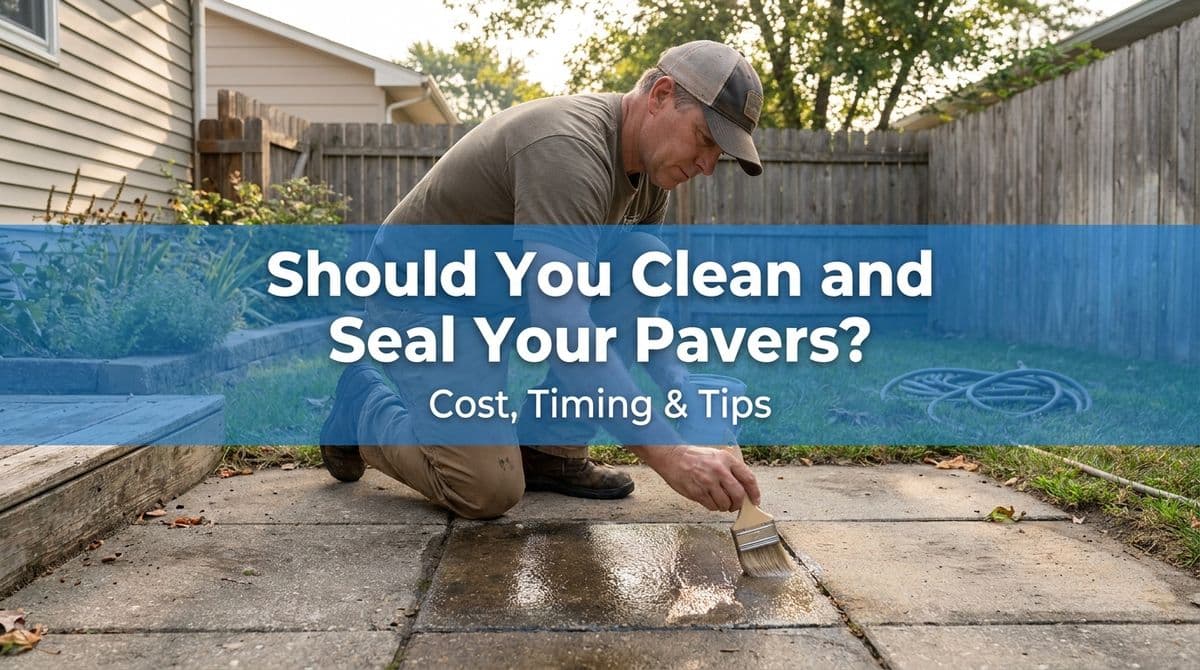
Why Homeowners Ask About Cleaning and Sealing Pavers
We recently got a call from a homeowner — let’s call her Karen — who sounded a little stressed. She had pavers in the driveway, a side walkway, and a backyard pergola area that were installed years ago. They’d never been professionally cleaned or sealed, and this year the birds had basically declared war on her patio. On top of that, her son’s graduation party was just days away, and she wanted everything looking great before guests arrived.
When Karen called us, we walked her through what we recommend for older pavers, what sealing actually does, rough price ranges, and what was realistic on her tight timeline. We have this same conversation with a lot of homeowners, so we turned that call into this guide to help you decide what’s right for your driveway, patio, or backyard.
What Sealing Your Pavers Really Does
On the phone with Karen, the first thing we explained was why sealing matters. Her pavers had held up structurally, but they looked tired and stained from bird droppings and tire marks. Sealing doesn’t just make them shiny — it adds protection and can refresh the overall look.
Here’s what a quality sealer typically does when we apply it:
- Stain resistance: Sealer helps repel spills, bird droppings, and car drips so they don’t soak in as quickly. That buys you time to clean them before a permanent stain sets.
- Color enhancement: Many sealers deepen the natural color of the pavers, similar to how they look when they’re wet. Dull, chalky pavers often look richer and more uniform after sealing.
- Longevity: By limiting water absorption, UV damage, and surface erosion, sealing can extend the life of the paver surface and keep joint sand in place longer.
When we visit a home like Karen’s, we always evaluate the paver material, age, and exposure before recommending a specific sealer. Not every surface needs a gloss; sometimes a natural, low-sheen look is the best choice for both appearance and safety.
Do Your Pavers Need Professional Cleaning and Sealing?
Karen had been using a homeowner-grade pressure washer “every so often” to keep things presentable. That’s very common, and there’s nothing wrong with light DIY cleaning. But there are some clear signs it’s time to bring in a professional crew like ours:
- Deep, stubborn grime: The pavers still look dingy even after you pressure wash.
- Widespread staining: Bird droppings, leaf stains, tire tracks, or food and drink spots that don’t fully lift.
- Uneven color: Some sections look washed out while others are darker or blotchy.
- No prior sealing: If it’s been years (or never) since installation and you’re in a harsh sun or heavy-use area, the surface is usually overdue.
On Karen’s property, the pavers were around 9 years old in back and about 4 years old out front, with no record of professional sealing. Based on what we see on jobs like this, we typically recommend a thorough cleaning and then sealing to reset the clock on UV and stain protection.
How Often Should You Clean and Seal Pavers?
On the call, Karen asked if this was something she’d have to do every year. Our answer was: usually no.
In our experience, a good schedule for most homes is:
- Professional cleaning: Every 1–3 years, depending on traffic, trees, pets, and birds.
- Sealing: About every 3–5 years, or when you notice water no longer beading on the surface or the color looking flat again.
High-traffic driveways and sun-baked patios may need attention on the earlier side of that range; covered patios and low-use walkways can often go longer. When we service a property, we always leave homeowners with a tailored maintenance interval based on what we see on site.
Typical Costs to Clean and Seal Pavers
Karen’s next question was the big one: “Roughly how much can all of this cost in the worst-case scenario?” We’re very straightforward about pricing on calls like hers.
Here’s how it typically breaks down for our services:
- Professional cleaning only: For an average home, our minimum service for cleaning alone usually starts around $399, and then scales with square footage and condition.
- Cleaning + sealing: Because of material and labor, our minimum service charge for cleaning and sealing combined usually starts around $899. For many standard-size driveways and patios, the final price ends up close to that minimum, depending on the exact layout and condition.
When we looked at Karen’s home via satellite, we could see that while she had pavers around the entire house, the total square footage wasn’t enormous, so we knew her cost would be near that lower end. We always confirm pricing after measuring on site and checking for problem areas.
What Affects the Final Cost?
Besides the base minimum, a few factors can move your price up or down:
- Square footage: More surface equals more time, cleaner, sealer, and sand.
- Condition: Heavily soiled, moldy, or uneven pavers take more prep and cleanup.
- Stains and specialty work: Oil, rust, or paint stains require extra steps beyond standard cleaning.
- Access and layout: Tight spaces, multiple levels, or obstacles like pools and landscaping can add setup time.
When homeowners like Karen ask us for a “worst-case” ballpark on the phone, we give a realistic range but always follow up with photos, satellite review, or an in-person visit so there are no surprises.
Timing: Can You Get It Done Before an Event?
Because Karen had a graduation party coming up that Saturday, timing was just as important as price. This is where expectations matter.
Here’s how we usually advise homeowners on timing:
- Booking the job: We’re often scheduled out at least a week or more. For major events, contact us 2–4 weeks in advance when possible.
- Cleaning day: Cleaning and prep can usually be completed in one day for a typical driveway and patio system.
- Sealing and drying: Sealing may be done the same day (after drying) or the next day, and then you need cure time. Light foot traffic is usually okay in 24 hours; we recommend keeping vehicles off for 48–72 hours, depending on conditions.
For a tight deadline like Karen’s, we’ll look at our schedule and, if possible, prioritize at least a professional cleaning before the event, with sealing scheduled shortly after. That way, the space looks fresh for guests, and we still have the flexibility to do the sealing under ideal conditions.
Simple DIY Maintenance Between Professional Visits
At the end of our call, Karen said she also wanted “ideas on proper maintenance so it stays clean and presentable.” That’s something we walk through with every customer after we service their pavers.
Here are the basics we recommend between professional cleanings:
- Regular sweeping or blowing: Keep leaves, dust, and debris off the surface so they don’t stain or encourage weeds.
- Quick rinse: Use a garden hose and a gentle spray to wash away loose dirt. Avoid blasting joints with a high-pressure nozzle.
- Mild soap solutions: For general grime, a bucket of warm water with a mild dish soap and a soft brush works wonders.
Dealing with Bird Droppings, Tire Marks, and Everyday Grime
Since bird droppings and normal driveway stains were Karen’s biggest concerns, we gave her a few specific tips:
- Bird droppings: Rinse them off as soon as you can. If they’ve dried, wet the area, let it soften for a few minutes, then gently scrub with a soft brush and mild cleaner. Don’t use harsh acids or metal brushes that can damage the sealer or paver surface.
- Tire marks: For light tire scuffs, a mild degreasing cleaner and a stiff (but not metal) brush usually do the trick. Rinse thoroughly afterward.
- General grime: If the whole area looks dusty or dull, a gentle, wide-fan nozzle on a homeowner pressure washer is fine. Just keep the pressure lower and stay a bit back from the surface to avoid blasting out joint sand.
When we complete a cleaning and sealing project, we always point out which cleaners are safe for the specific sealer we used and where to be extra careful — for example, around pool edges or high-traffic steps.
When You’re Ready to Refresh Your Pavers
If your driveway, patio, or backyard pavers are starting to look like Karen’s — stained from birds, faded from the sun, and no longer responding to DIY cleaning — it’s probably time to bring in a professional team. We can evaluate which areas truly need sealing, give you honest pricing based on square footage and condition, and help you plan around any upcoming events so your outdoor spaces look their best when it counts.
Whether you just need a deep clean this season or you’re ready for full cleaning and sealing, we’re always happy to walk you through options, just like we did on that call with Karen.