What To Expect During a Professional Patio Cleaning Walkthrough
Thinking about hiring a pro to clean your patio? Here’s what really happens during a walkthrough and how we evaluate your stone, stains, and surfaces.
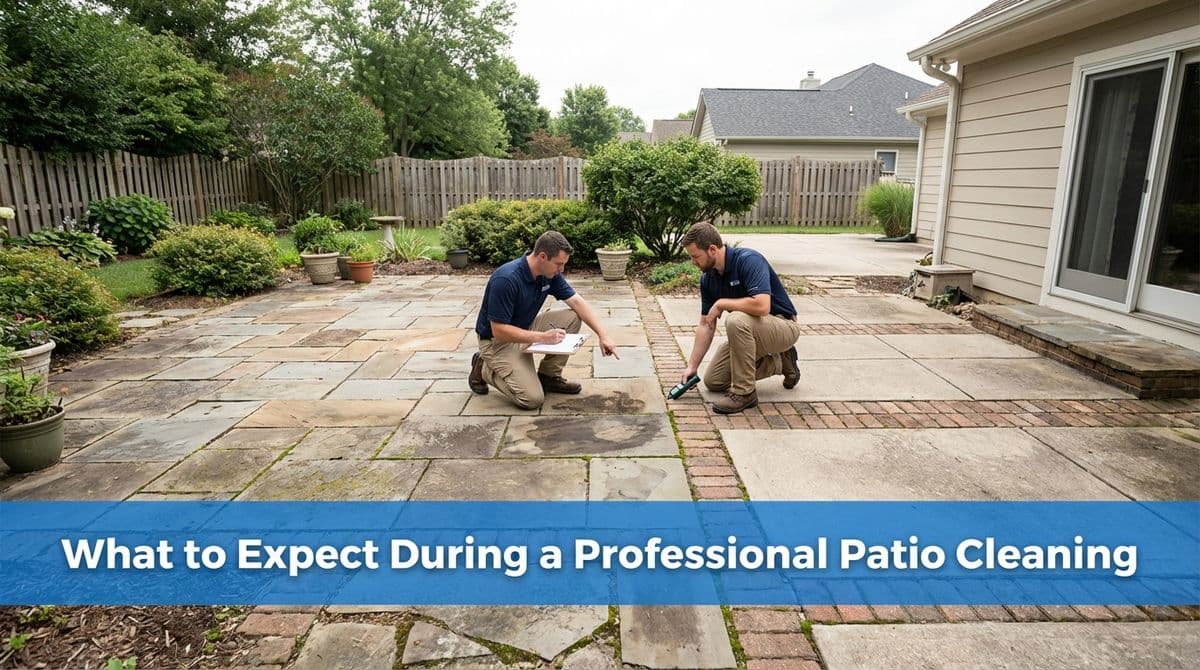
We recently got a call from a homeowner—let's call her Laura—who had both a front and back patio that "just didn’t look like they used to." She’d seen some of our work online and wanted to know what it would take to get her stone patios looking fresh again.
Like a lot of busy homeowners, Laura was trying to fit things between appointments. We coordinated a time, and I told her exactly what I tell everyone: our first visit is a quick, informal 5–10 minute walkthrough. No pressure, no hard sell—just an honest look at what we can do for your stone, and what we can’t.
If you’re thinking about a professional patio cleaning, here’s what you can expect during that first walkthrough and how we evaluate your stone, stains, and surrounding surfaces.
Step 1: A Quick Conversation at the Door
When we arrive, we start with a short chat. With Laura, I asked a few simple questions:
- How old is the home and the patio? (Hers had been rebuilt about 20 years ago in an established neighborhood.)
- Have the patios ever been professionally cleaned or sealed?
- What bothers you most—color, stains, or just general dinginess?
- Any other areas you’re considering? (Windows, turf, garage floor, etc.)
Those quick questions give us a sense of what we’re walking into: older stone vs. newer stone, potential hidden damage, and whether you’re just looking for a spruce-up or something closer to a restoration.
Step 2: Evaluating Your Stone Type and Condition
Next, we step out to the patio together. The first thing we’re looking at is what type of stone or surface you have. Different materials need different products and pressures:
- Travertine or limestone: Softer, more porous; needs gentle pressure and pH-appropriate cleaners.
- Pavers (concrete or clay): Durable, often respond well to pressure washing and deep cleaning.
- Flagstone or slate: Uneven surfaces where water can pool and algae can grow.
- Plain concrete: Tough, but can still etch or discolor with the wrong chemicals.
We also look closely at the condition of the stone:
- Any cracks, chips, or loose pieces?
- Are the edges of steps or coping worn?
- Does the surface feel chalky (a sign of weathering or sealer breakdown)?
This is where we start telling you, very honestly, what will and won’t come out. Some things are dirt and organic staining that clean up beautifully. Others—like deep rust, fertilizer burns, or etched stone—may improve but won’t disappear 100%.
Step 3: Identifying Stains and Problem Areas
Once we know what we’re standing on, we start looking at what’s on it. During a walkthrough, we’ll usually point out different stain types:
- Organic stains: Leaves, tree droppings, algae, mold, and mildew. These usually respond very well to professional cleaning.
- Food and drink stains: Grease from the grill, wine, or spills. Some lift easily; older grease can take more work.
- Rust and metal stains: From furniture, planters, or irrigation. These are stubborn and may require specialty products.
- Efflorescence: White, powdery deposits from salts in the stone or mortar. Cleanable, but sometimes recurring.
- Tire marks or traffic wear: Common on driveways or entryways.
As we walk, we’ll usually say something like, “This green algae along the shady side will come up nicely,” or, “These rust circles from the chair legs may lighten, but I don’t want to promise they’ll vanish completely.”
That clarity up front is one of the main reasons we insist on seeing the patios in person before giving a firm quote.
Step 4: Checking Surrounding Surfaces and Extras
During Laura’s call, she mentioned possibly adding on other services. That’s actually pretty common—once we’re there, homeowners start noticing a few more things they’d love to freshen up.
On a typical walkthrough, besides front and back patios, we’ll often take a quick look at:
- Exterior windows and sliders near the patio
- Artificial turf that might need a rinse and refresh
- Garage floor or driveway with oil or tire marks
- Trash can area if odor is an issue nearby
We’re not trying to pile on a giant list; we’re just giving you options. Many homeowners appreciate a “while you’re here” quote for windows or turf even if they don’t do it right away.
Step 5: Explaining the Cleaning Process and Limitations
Before we ever talk price, we explain how we’d approach your specific patio. For example, we might walk you through:
- What equipment we’ll use (pressure washer, surface cleaner, specialty brushes)
- What cleaning solutions are appropriate for your stone
- How we’ll protect nearby plants, walls, or outdoor furniture
- Where the rinse water will go and how we control runoff
We’ll also be upfront about limitations:
- If a stain has permanently discolored or etched the stone
- If older grout or mortar might flake with aggressive cleaning
- If a sealer is failing and needs to be redone after cleaning
Our goal is to set realistic expectations so you’re pleasantly surprised by the results—not disappointed by a promise that never should’ve been made.
Step 6: A Clear, No-Pressure Quote
After we’ve seen everything, we’ll give you a straightforward quote and go over it on the spot. For most homes, that entire walkthrough—front and back patios, questions, and quote—takes about five minutes.
You’re never locked in. Just like with Laura, we’ll often say something like, “Here’s what I recommend for the patios. While I was here I also priced out the windows—totally up to you if you want to add that now or later.”
How to Get the Most From Your Walkthrough
If you’re scheduling a patio cleaning estimate, a few quick tips will help you get the best information:
- Point out your biggest concerns first—specific stains, slippery areas, or spots that bother you most.
- Mention previous work—any sealing, pressure washing, or DIY cleaners you’ve used.
- Ask about maintenance—how to keep your patio looking good between professional cleanings.
- Ask what won’t come out—so you know exactly what to expect.
If your patios are starting to look tired and you’re not sure what’s possible, that quick, informal walkthrough is the best first step. We’ll take a careful look at your stone, talk honestly about your stains, and give you a clear plan—so you can decide what makes sense for your home and your schedule.