Will Pressure Washing Ruin Peeling Patio Paint?
Peeling patio paint and pressure washing don’t always mix. Learn what really happens when you wash painted concrete or decks, and how to protect your surfaces.
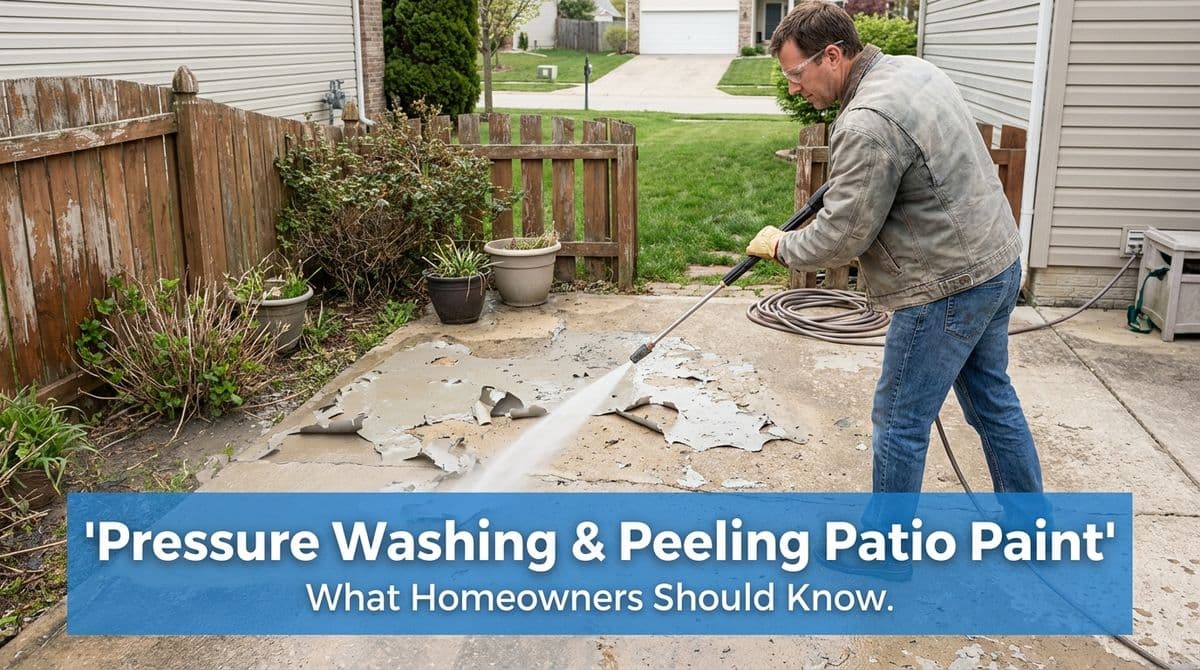
We recently got a call from a homeowner — we’ll call her Linda — who wanted her front and back patios cleaned, plus a short run of gutters over the back patio. As we went over the details, she mentioned something we hear a lot this time of year:
“We have paint on the patio, and it’s starting to come off in sections. If you pressure wash it, won’t more of the paint peel?”
That’s an important question to ask before anyone starts blasting away at painted concrete or a painted deck. In Linda’s case, we made a note to keep extra distance and use lower pressure around the peeling areas, but we also explained what homeowners should realistically expect.
Will Pressure Washing Remove Peeling Patio Paint?
The short answer: yes, it often will — at least some of it. Once patio paint starts peeling or flaking, it has already lost its bond with the surface underneath. A pressure washer doesn’t cause that failure, but the force of the water can easily lift and carry away loose or weakly bonded paint.
On a 20+ year-old patio like Linda’s, with paint that’s already coming off in sections, pressure washing can:
- Remove dust, dirt, and debris sitting on the surface
- Lift and strip loose and peeling paint
- Expose more of the bare concrete or decking underneath
If the goal is a spotless patio and you don’t plan to repaint soon, that surprise loss of paint can be frustrating. That’s why we always talk through expectations beforehand.
Why Painted Patios Start Peeling (And How Pressure Washing Plays In)
Paint on horizontal outdoor surfaces (like patios, porches, and pool decks) takes a beating from sun, moisture, and temperature swings. Over time, even a good coating can start to:
- Fade and chalk (get powdery on the surface)
- Crack along hairline cracks in the concrete
- Peel where water pools or where furniture legs scrape
Once the bond is compromised, pressure washing becomes a bit of a test: wherever the paint is still well-adhered, it may stay in place. Wherever it’s weak or already lifting, the water jet can finish the job and remove it.
That’s why, during Linda’s call, we were upfront that more paint would likely come off, even though we’d keep a respectful distance and use a gentler approach.
How We Adjust Our Cleaning Approach on Peeling Paint
When we know a patio or deck is painted and peeling, we adjust our process to balance cleanliness with caution. Typically, we’ll:
- Start with lower pressure and a wider spray fan
- Back the wand farther away from the surface to soften the impact
- Avoid aggressive tips (no pinpoint or turbo nozzles on failing paint)
- Test a small, out-of-the-way area first so the homeowner can see what will happen
This is similar to what we planned for Linda’s patios: give everything a good rinse and clean, but treat the painted areas with kid gloves so we’re not unintentionally stripping huge sections at once.
Even with these precautions, though, some additional peeling is almost guaranteed if the coating is already failing.
Questions to Ask Yourself Before Washing a Painted Patio
Before you (or a professional) pressure wash a painted concrete or deck surface, it helps to be clear on your priorities. We usually walk homeowners through questions like these:
- Is appearance or longevity more important right now?
If you want the patio to look freshly painted for a party next week, aggressive washing may not be your best friend. Gentle rinsing might be safer, even if it leaves some grime. - Are you planning to repaint soon?
If you are, then removing loose paint is actually helpful. A thorough clean and partial strip gives the new coating a better surface to bond to. - Is the paint failing everywhere or just in spots?
Spot peeling in high-traffic or wet areas usually means we can clean around it carefully. Widespread peeling suggests the whole coating is near the end of its life.
Your answers help us decide whether to focus on gentle cleaning, or treat the wash as the first step in a repainting project.
DIY vs. Hiring a Pro for Peeling Painted Surfaces
Many homeowners own or rent pressure washers and wonder if they should handle a peeling painted patio themselves. Here’s how we break it down.
When DIY Can Make Sense
- The patio or deck is small and easy to access
- You’re comfortable with tools and can test pressure on an inconspicuous area
- Your goal is to fully strip the old paint before repainting
- You’re okay with an uneven look temporarily as you remove paint in stages
In that case, use the lowest pressure that gets the job done, keep the wand moving, and always wear eye and foot protection. Never use a pinpoint nozzle on painted concrete or wood — it can gouge the surface.
When It’s Better to Call a Professional
- The patio is large, elevated, or has tricky access
- The painted surface is right next to doors, windows, or delicate landscaping
- You’re worried about damaging concrete, wood, or nearby features
- You or a family member have mobility or health concerns and can’t move furniture or equipment safely
In situations like Linda’s — limited mobility in the household and furniture that needs to be shifted — having a pro handle the setup and cleaning is not just convenient, it’s safer.
How to Prepare Your Painted Patio Before We Arrive
If you decide to have us clean a painted patio or deck, here are a few simple steps that make a big difference:
- Move lightweight furniture and décor off the surface if you’re able, or let us know what needs to stay put
- Point out any peeling, bubbling, or cracked paint so we can take extra care around those spots
- Share your long-term plans — repainting soon, or trying to stretch the current coating a bit longer
- Keep pets and kids inside while we’re working and the surface is drying
The more we know up front, the better we can tailor our pressure, distance, and detergents to meet your goals and protect your surfaces.
Bottom Line: Expect Some Paint Loss, But Gain a Cleaner Surface
Pressure washing is a powerful tool for cleaning patios, but when paint is already peeling, it will likely accelerate the process in those weak areas. That isn’t always a bad thing — especially if you’re getting ready to repaint — but it’s something homeowners need to understand before any cleaning begins.
If you’re looking at your own painted patio or deck and wondering how pressure washing will affect it, we’re happy to talk it through, just like we did with Linda. We can help you strike the right balance between getting things clean and preserving your paint for as long as possible.