How to Get Your Patio Guest‑Ready with Power Washing
Getting ready for guests? Learn how to safely power wash travertine, furniture, and outdoor kitchens so your patio and pool area are truly guest‑ready.
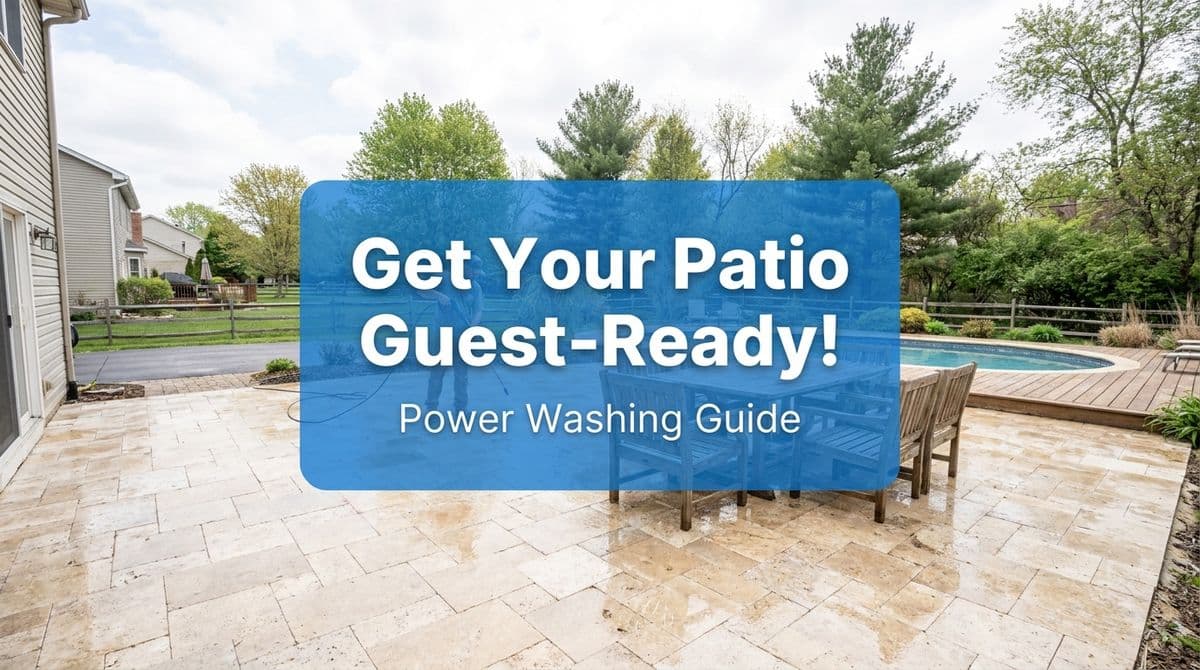
Getting Your Patio Guest‑Ready Before the Family Arrives
We recently got a call from a homeowner — let’s call her Lori — who had family flying in for a big pool week. Her travertine patio, outdoor kitchen, and furniture had all picked up a layer of dust and grime. A quick rinse with the hose helped a little, but as she put it, “I think it’s due for something a little stronger than just a hose can do.”
Lori wanted everything guest‑ready: front porch, back patio, outdoor kitchen under the pavilion, and all the lightweight furniture and mats. She also wanted to know what’s safe for travertine, how we handle furniture, and whether power washing would damage anything.
We walk through these questions with homeowners every week, so in this guide I’ll share exactly how we approach getting a patio and outdoor living space truly guest‑ready — and what you can safely DIY versus when it’s smart to call in a pro.
Step 1: Walk Your Space Like a Guest
When we schedule an estimate, we like to walk the space just like a guest would. You can do the same before you start cleaning:
- Start at the front porch: Notice dusty mats, cobwebs, and dirty furniture arms.
- Move through the side yard or pathway: Look for dirt trails, stains, or built‑up debris.
- End at the back patio and pool area: Check the travertine, outdoor kitchen, and tables where people will set drinks and plates.
Take a few quick photos on your phone. This gives you “before” shots and helps you decide what absolutely has to be done before guests arrive.
Step 2: Prep the Area Before You Power Wash
With Lori, one of the first questions we asked was about her furniture: should we move it or clean it in place? Her pieces were very lightweight, so we recommended moving most of it off the travertine so we could clean everything evenly and avoid leaving dirty outlines.
Here’s a simple prep checklist you can follow:
- Move lightweight furniture and mats: Set them on a clean section of driveway or lawn for separate cleaning.
- Clear small items: Remove cushions, rugs, lanterns, planters that could be damaged by water pressure.
- Cover or move sensitive items: Electronics, outdoor speakers, and anything that shouldn’t get soaked.
- Check doors and windows: Make sure they’re fully closed and weatherstripping is intact.
Step 3: Safe Power Washing for Travertine
Travertine looks tough, but it’s a natural stone and can be etched or damaged if you go too hard with a power washer. When Lori mentioned her patio was travertine, we immediately knew we’d be treating it more gently than, say, plain concrete.
Here’s how we safely clean travertine:
- Use moderate pressure: Generally, keep it around 1,200–2,000 PSI for travertine. Higher PSI can chip or etch the surface, especially if it’s already weathered.
- Choose the right tip: A 25° or 40° fan tip is safer than a narrow, cutting jet. Avoid 0° “pencil” tips on stone.
- Keep a safe distance: Start 12–18 inches away and move closer only if needed. Test in an inconspicuous corner first.
- Watch your angle: Spray at a shallow angle, not straight down. This helps lift dirt without driving water into grout lines.
If your travertine is sealed, you’ll often see water bead up slightly. If it darkens quickly and stays dark a long time, your sealer may be worn — that’s a good time to talk to a professional about resealing after cleaning.
Step 4: Cleaning Patterns That Prevent Streaks
Uneven cleaning is one of the biggest “DIY giveaways” we see when we come out to do a touch‑up. To keep your patio looking professionally done:
- Work in sections: Divide the patio into manageable rectangles.
- Overlap your passes: Move the wand in smooth, overlapping lines, just like mowing a lawn.
- Rinse toward a drain: Keep water flowing toward the yard or designated drains, not back toward door thresholds.
- Finish with a low‑pressure rinse: After lifting the dirt, give everything a gentler final rinse to move out any remaining residue.
Step 5: Furniture, Mats, and Outdoor Kitchens
In Lori’s case, our service included front and back porches, furniture, mats, and the outdoor kitchen area with a bar and small grill under a pavilion. That’s pretty typical for an outdoor “guest‑ready” package.
Outdoor Furniture & Mats
For furniture and mats, we usually:
- Start with a dry brush: Knock off loose dust and cobwebs first.
- Use lower pressure: Especially on wicker, mesh, or painted metal. Back the nozzle off to avoid tearing fabric or chipping paint.
- Spot‑clean stains: A mild detergent and soft brush work better than blasting with high pressure.
- Let them dry in the sun: Stand cushions on edge and hang mats if possible to dry faster.
Outdoor Kitchens (Without Damaging Anything)
We clean the exterior of grills and kitchen fixtures, not the inside of the grill. For outdoor kitchens:
- Turn off gas lines and cover outlets: Safety first around gas and electric.
- Use controlled pressure: Lower PSI and a fan tip around stainless, stone facing, and cabinets.
- Avoid direct spray into gaps: Don’t blast into vent holes, hinges, or cabinet seams.
- Finish with a wipe‑down: After rinsing, we often wipe stainless with a soft cloth to prevent water spots.
Step 6: Safety Precautions Homeowners Often Overlook
Power washers can do real damage to surfaces — and to people — if they’re not handled carefully. When we train new technicians, we emphasize a few non‑negotiables you can follow at home:
- Wear protection: Closed‑toe shoes, eye protection, and ideally ear protection if you’re working for a while.
- Never spray skin or pets: Even “medium” PSI can cut skin or drive bacteria into wounds.
- Avoid ladders with a live wand: The kickback from the gun can throw off your balance.
- Be cautious around grout and edges: High pressure at close range can blow out grout or loosen tiles.
- Test detergents first: If you use a cleaner, spot‑test on a hidden area to be sure it doesn’t discolor stone or metal.
Pre‑ and Post‑Cleaning Checklists
Quick Pre‑Cleaning Checklist
- Walk the space like a guest; note high‑visibility areas.
- Move lightweight furniture, cushions, and mats off the main surface.
- Cover or move electronics, plants, and anything delicate.
- Close doors and windows; check thresholds and weatherstripping.
- Choose the right tip and set an appropriate PSI for your surface.
- Test in an inconspicuous corner of your travertine or stone.
Quick Post‑Cleaning Checklist
- Inspect the whole area for missed spots or streaks.
- Check that water hasn’t pooled near doors or foundation areas.
- Let furniture and mats dry fully before putting cushions back.
- Wipe stainless or glass surfaces to prevent water spots.
- Take “after” photos so you can compare at your next cleaning.
When to Call a Pro Before the Big Gathering
Lori’s main goal was to have everything shining the week her family arrived, and that’s when it often makes sense to bring in help. We typically bundle the front porch, back patio, furniture, mats, and outdoor kitchen area into one visit so the whole space feels cohesive and ready for guests.
If you’re short on time, unsure about your travertine, or just want a guaranteed result before everyone shows up, it’s worth scheduling a professional wash a few days before your event. Then you can focus on the fun part — enjoying the clean patio, not scrubbing it.
Whether you decide to DIY or call us in, a thoughtful walk‑through, gentle but thorough cleaning, and a little attention to safety will make your outdoor living space look and feel truly guest‑ready.