How Clean Can Your Oil-Stained Driveway Really Get?
Oil stains don’t have to ruin your curb appeal. Learn what hot water pressure washing can realistically do for your driveway and when it’s worth calling a pro.
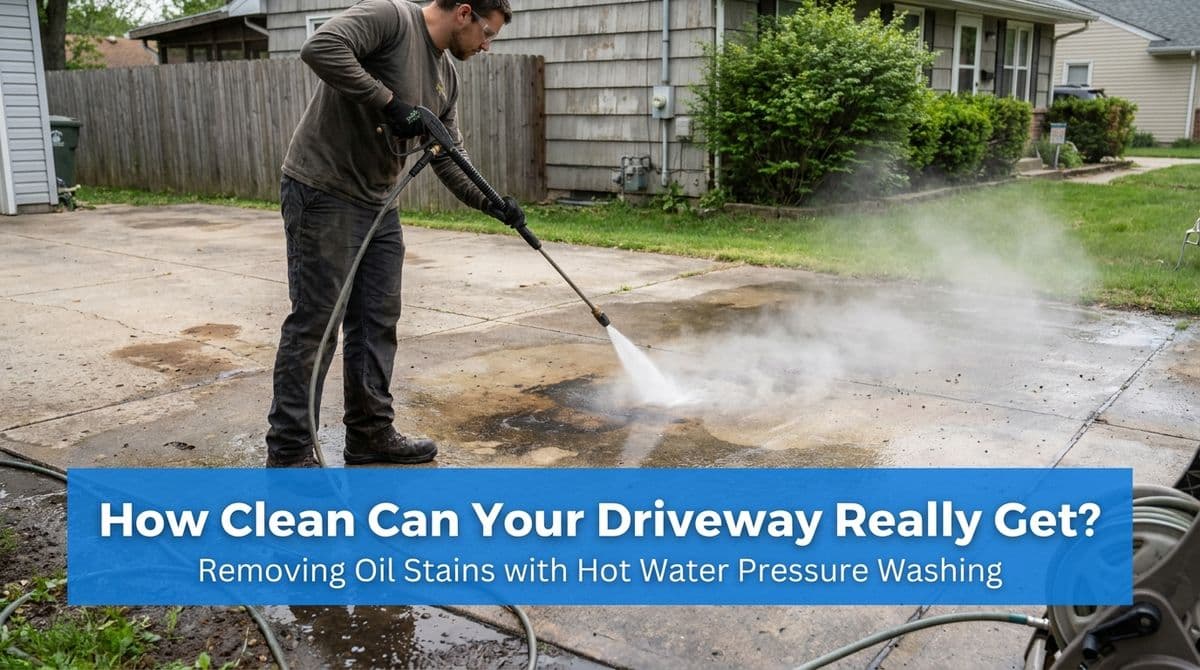
“Can You Really Get These Oil Stains Out?”
We recently got a call from a homeowner — let’s call him Mike — who was putting together a spring cleaning list for his Avondale home. He wanted windows cleaned, patio furniture freshened up, and his front and back porch looking sharp.
Near the end of the call, he paused and said, “Oh, and do you do driveway cleaning? I’ve got some oil stains out there that probably need to get off.”
We hear that question all the time. Mike’s real question was one most homeowners have but don’t always say out loud: “How clean can my driveway really get, and is it worth trying to get old oil stains out?”
Let’s walk through how we answered him — and what you should know if you’re staring at dark oil spots on your own driveway.
How Clean Is “Realistic” for Oil-Stained Concrete?
The first thing we told Mike was the same thing we tell everyone with oil stains: oil is almost never 100% removable from concrete once it has soaked in.
Concrete is porous, like a very hard sponge. When motor oil or transmission fluid drips onto it and isn’t cleaned quickly, it seeps below the surface. A surface wash can’t always reach those deeper layers, so even after a thorough cleaning, there may be a faint shadow where the stain once was.
That said, with the right process, we can usually lighten oil stains dramatically and make them far less noticeable. Most homeowners are pleasantly surprised by how much better the driveway looks, even if it doesn’t look brand new.
What We Aim for With Oil Stain Removal
When we talked to Mike, we set expectations this way:
- Fresh stains: Can often be lightened to where they’re barely visible.
- Older, deep stains: Usually lighten significantly, but a faint outline or shadow may remain.
- Overall driveway appearance: The entire surface looks brighter, more even, and much cleaner, so any remaining marks blend in better.
Our goal is always to get the driveway looking as close to “new” as the concrete will allow — without promising something nature and chemistry just won’t give us.
Why Hot Water Pressure Washing Makes Such a Difference
On the call, Mike noticed we listed different levels of driveway cleaning: basic, deep cleaning, and hot water pressure cleaning. For oil stains, we recommended the hot water option right away.
Here’s why hot water matters so much:
- Heat breaks down oil: Just like washing greasy dishes, hot water helps loosen and emulsify oil so it can be lifted from the concrete.
- Detergents work better: The cleaning solutions we use are more effective at higher temperatures.
- Deeper penetration: Hot water can reach slightly deeper into those tiny pores in the concrete than cold water alone.
If your driveway just has dirt, dust, and light tire marks, a standard or deep cold-water cleaning may be enough. But if oil is the main issue, hot water pressure washing is almost always your best bet for getting the maximum improvement.
How We Evaluate a Driveway During an Onsite Visit
With Mike, we suggested having a technician stop by to take a look before finalizing the service bundle. That visit isn’t just for pricing; it’s also where we set realistic expectations and choose the right cleaning approach.
On a typical driveway evaluation, we’ll:
- Identify the stain types: Oil, rust, paint, tire marks, mold/mildew, or a mix.
- Check the age and condition of the concrete: Newer concrete cleans differently than a 20+ year-old surface.
- Look at how long stains have been there: Fresh drips vs. long-term leaks that have soaked in.
- Test a small area if needed: Sometimes we do a quick spot test to estimate how much a stain will fade.
After that, we can clearly explain whether a basic, deep, or hot water cleaning is the best fit — and how dramatic a change you can realistically expect.
How Long Does a Hot Water Driveway Cleaning Take?
Another thing homeowners like Mike often ask is, “How long will this take — am I losing my driveway for the whole day?”
For a typical residential driveway, here’s a common timeline:
- Setup and protection: 15–30 minutes to prep equipment and shield nearby areas.
- Pre-treatment: 15–30 minutes to apply detergents or degreasers and let them dwell.
- Hot water pressure washing: 45–90 minutes depending on size and severity of stains.
- Rinse and cleanup: 15–30 minutes to rinse thoroughly and pick up equipment.
Most driveways are cleaned in about 1.5 to 3 hours. In warm, dry weather, the surface usually dries enough to park on again later that same day, though we may recommend giving certain pre-treated areas a bit more time.
Common Concerns: Landscaping, Garage Doors & Overspray
Mike also wanted to bundle patio and window services, so we talked about how driveway cleaning fits into the bigger picture. Whenever we do a hot water cleaning, we’re careful about what’s around the driveway, not just the concrete itself.
Protecting Nearby Plants
Homeowners often worry, “Will this hurt my grass or landscaping?” With proper technique, it shouldn’t. We typically:
- Lightly pre-wet nearby plants and grass so they’re less likely to absorb any detergent.
- Use targeted application to keep solutions on the concrete, not your flower beds.
- Rinse surrounding areas thoroughly after cleaning.
Keeping Garage Doors, Walls & Windows Safe
We’re also careful around your home’s exterior finishes. On a driveway job we’ll:
- Avoid direct high-pressure spray on garage doors and painted trim.
- Control overspray so dirty water doesn’t splash onto freshly cleaned windows or patio furniture.
- Adjust pressure and tips depending on the surface we’re near.
This is especially important when, like Mike, you’re doing a bundle of services — windows, patio areas, and driveway all at once. We plan the order of work so we’re not cleaning one thing and dirtying another.
When Is DIY Enough — and When to Call a Pro?
If you catch a small oil spill right away, you can often do some basic cleanup yourself:
- Blot fresh oil with rags or paper towels (don’t rub it in).
- Apply an absorbent (kitty litter, baking soda, or commercial oil absorber) and let it sit.
- Sweep up, then use a mild degreaser and a stiff brush with hose water.
But if you’re dealing with older, darker, or widespread stains — or you want the whole driveway to look brighter and more even — that’s when hot water pressure cleaning is worth it.
That’s the point Mike was at. His driveway had years of drips and leaks, and he wanted the house looking sharp for spring. By walking him through the process, bundling services, and explaining what was realistic, we helped him make an informed decision — and his driveway ended up looking much better than he expected.
Thinking About Cleaning Your Own Driveway?
If you’re staring at stubborn oil spots and wondering what’s possible, the key is to understand this balance: hot water pressure washing can’t perform miracles, but it can dramatically improve both stains and overall curb appeal when it’s done right.
Whether you decide to tackle small spots on your own or bring in a pro for a full hot water cleaning, knowing what’s realistic will help you choose the option that makes the most sense for your home — and your driveway.