Deep vs. Basic Concrete Clean & When Sealing Is Worth It
Wondering if you need a basic or deep clean for your concrete — and whether to add sealing? Here’s what really comes clean and when sealing is worth it.
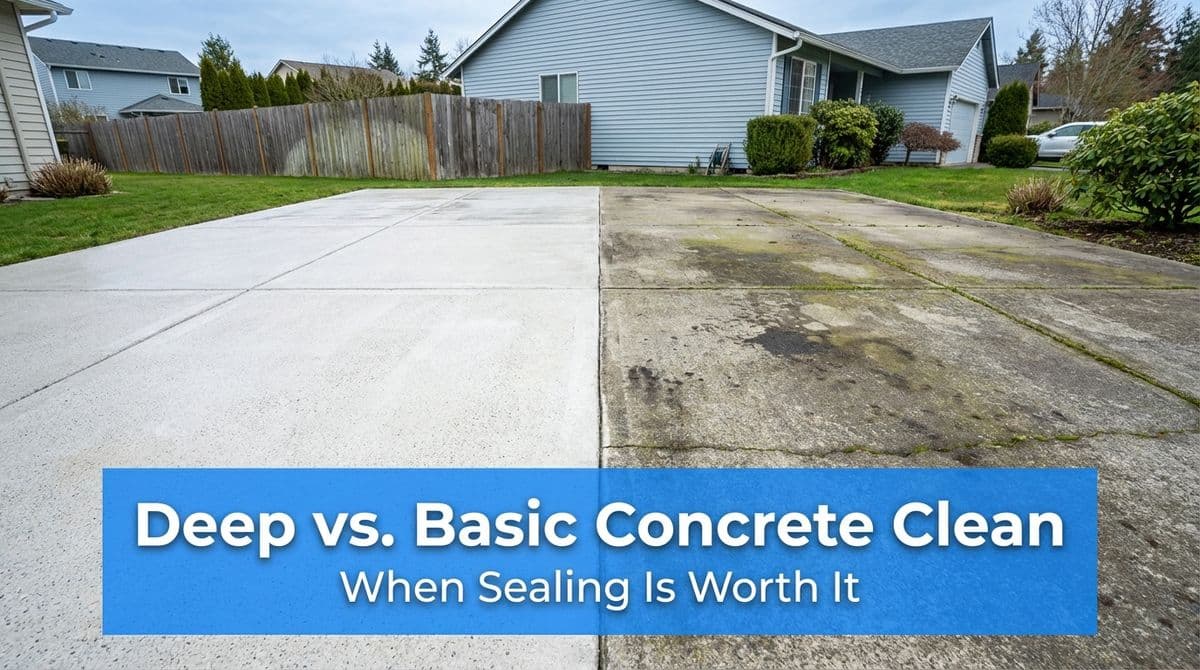
Why Some Concrete Comes Clean Easily (And Some Doesn’t)
We recently got a call from a homeowner — let’s call him Mark — who had seen our ad for a $149 patio cleaning special. He was excited to get his back patio cleaned, but as we talked, his project grew: front porch, back porch, outdoor furniture, rugs, and then the big question — “While you’re here, can you also deep clean the driveway and maybe seal it?”
That turned into a great conversation about what a basic clean can do, what a deep clean can actually fix, and when it makes sense to invest in sealing. If you’re staring at tire marks or dingy concrete and wondering what you really need, Mark’s questions are probably your questions too.
Basic Clean vs. Deep Clean: What’s the Real Difference?
On Mark’s call, I explained that we offer two main levels of driveway and patio cleaning:
- Basic clean – a solid wash that removes loose dirt and light surface grime.
- Deep clean – a slower, more involved process with chemicals and specialized attachments.
The basic clean is ideal when your concrete is mostly dusty or has:
- Wind-blown dirt and debris
- Bird droppings
- Light surface stains
- General “dingy” look from weather
Think of basic cleaning as a really good shower for your concrete. We’re rinsing away what’s on top, but we’re not going after deeply embedded stains. On Mark’s driveway, he had more than just dust — those dark, stubborn tire tracks.
What a Deep Clean Can (and Can’t) Fix
That’s where deep cleaning comes in. When Mark said, “It’s mostly dirty and tire marks,” I told him he was a good candidate for a deep clean. With a deep clean, we:
- Apply targeted cleaning solutions to break down embedded grime
- Use specialized surface cleaners and attachments (not just a wand)
- Work more slowly and methodically over each section
- Focus extra time on heavy tire marks and long-term buildup
Done right, a deep clean can dramatically improve:
- Tire marks and traffic patterns
- Embedded dirt in the pores of the concrete
- Light rust stains and miscellaneous marks
- General color and brightness of the slab
But there’s one thing I always clarify on calls, and I told Mark the same thing: old oil stains are the main exception. Even with a deep clean, oil that has soaked far into the concrete may lighten, but often doesn’t disappear completely. That’s an honest limitation of the material, not the cleaning.
How We Decide Which Level You Need
On the phone with Mark, I pulled up a satellite view of his home. I could see the layout of his rectangular driveway, the offshoot toward the front door, and the side patio. That’s usually how we start:
- We look at size and layout of the concrete
- We ask about main problems (tire marks, oil, general dirt, etc.)
- We suggest basic or deep based on what you want to see improved
In Mark’s case, he wanted his concrete to look as close to new as possible, especially the driveway. That’s why he chose a deep clean there, while still taking advantage of the patio package for front and back porches, furniture, and the outdoor kitchen area.
As a rough guide:
- Choose basic clean if you mostly care about dust, cobwebs, and light grime.
- Choose deep clean if you’re bothered by dark tire marks, heavy traffic patterns, and years of buildup.
When Does Sealing Concrete Make Sense?
After we talked through cleaning, Mark asked the question we get all the time: “Do you do sealing also?”
We do, and it’s a bigger investment, but it changes how your concrete ages. Here’s how I like to explain it:
- Cleaning is about making your concrete look good today.
- Sealing is about helping it stay that way tomorrow.
The professional sealers we use aren’t the cheap stuff from a big-box store. Our product alone runs us roughly $200 a gallon because it’s designed to:
- Penetrate the concrete surface
- Help resist future staining from dirt, spills, and tire marks
- Make future cleanings easier and more effective
For Mark, we walked through pricing by square footage so he could decide if sealing the whole front area and driveway fit his budget now or if it made more sense to just clean this season and plan for sealing later.
Should You Seal Right After a Deep Clean?
If you’re considering sealing, right after a deep clean is the ideal time — the pores are open and clear of contaminants. Here’s when we usually recommend sealing:
- You’ve just invested in a deep clean and love how it looks
- Your driveway or patio sees a lot of traffic (cars, kids, pets, parties)
- You’ve had recurring stains you’re tired of fighting
- You want to protect decorative or colored concrete
We’ll measure the actual square footage and give you a clear per-square-foot price so you can choose exactly which areas to seal — maybe just the driveway, or the driveway plus front walk, or the entire hardscape like Mark was considering.
Putting It All Together for Your Home
When Mark said, “If we’re going to clean it, we might as well clean everything,” that’s how many homeowners feel once they understand their options. In his case, the final plan looked something like this:
- Patio package: front and back porch, furniture, rugs, and outdoor kitchen area
- Deep clean on the full driveway slab
- Optional add-on for the side patio and potential sealing of the front hardscape
If you’re unsure what you really need, we’re happy to walk you through it the same way: ask about your stains, look at your layout, explain what will and won’t come out, and give you honest options for cleaning and sealing so you can decide what makes sense for your home and your budget.